Every Monday I share an excerpt from my Energy Drink Guide. This week’s excerpt is bartender wisdom from PART ONE: Are They Safe. This week’s excerpt is important because too many people underestimate the danger of combining alcohol and energy drinks. In fact I often tell people that the most dangerous thing about Red Bull is the alarming frequency at which people mix it with alcohol.
“Every good bartender also knows that giving a drunken person coffee just makes them a wide awake drunk. It doesn’t make them any less impaired.”
March is Caffeine Awareness Month, and what better way to celebrate than to revisit some of the most popular caffeine-related GreenEyedGuide posts! Remember that rebuttal to BroBible’s energy drink article or the open letter to Time magazine? How about the three tips for parents or the two Year-In-Review lists of all the “Energy Drink of the Month” winners? Do you remember what happens when energy drinks dress up like workout supplements?
(Click the title to open the article in a new tab)
BroBible may be have expert insights on some matters, but their article on energy drinks proves biology and food science isn’t in their wheelhouse. Here’s the point-counterpoint to all the misleading statements in their article.
BroBible’s misleading infographic on energy drink “science”
As a food scientist who’s studied energy drinks for over 10 years, Ms Sifferlin’s article came across as yet another “all energy drinks are lethal” story. While the article was missing many crucial facts, there were three points in particular that should be part of the conversation.
This presentation covers the effects of caffeine when it’s consumed before, during, or after a workout. We also review how the Five Levels of Fatigue helps people determine which caffeine products (if any) are right for them.
Energy drinks are in the news again, and this time the story is the reported increase in emergency room visits attributed to energy drinks. Are these stats more indicative of consumer misuse or that energy drinks are inherently more dangerous than other caffeinated beverages? Some clues to consider.
As always, my goal is to educate and inform, to provide an alternate perspective to help people look past confusing scientific jargon and learn the tools to making the best choices for their lifestyle. Caffeine is not always the answer but to find the right answers we must ask the right questions.
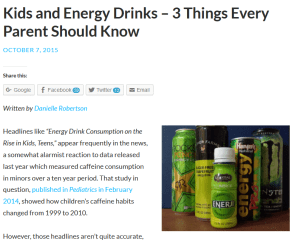
How concerned do parents need to be about the use of energy drinks in kids and teens? In the Green-Eyed Guide guest blog on The Scientific Parent, we review the three major details often left out of these conversations on caffeine, and how these details can dramatically boost our efforts to keep ourselves and our kids healthy and safe.
A study published in January 2014 involving over 40,000 people defines beverage caffeine intakes in the US, revealing the amounts of caffeine consumed and from what source per age group. As your Green-Eyed Guide, I’m going to explain what it all means.
Used with permission from Caffeine Informer. Source: Caffeine Safe Limits
What can 42,000 people tell us about the caffeine habits of the US population? Plenty, if you look at the right details. Understanding this information is critical to any conversation about caffeine safety.
With new caffeinated foods popping up, the FDA is getting more pressure to reevaluate the safety of caffeine, particularly for adolescents. We evaluate the impact of caffeinated gum and why CANADA has the best caffeine regulations.
—————————————–
ENERGY DRINK OF THE MONTH YEAR IN REVIEW (YEAR1 AND YEAR 2)
Energy drinks are horrible mixers (biochemically) but they work WONDERS for hangovers. It’s all in the science. So grab an aspirin and some greasy chips and let’s review!
BroBible may be have expert insights on some matters, but their article on energy drinks proves biology and food science isn’t in their wheelhouse. Here’s the point-counterpoint to all the misleading statements in their article:
BroBible’s misleading infographic on energy drink “science”
First of all, what is a “health expert”. A doctor? A registered dietitian? A health blogger?
As someone who literally wrote the book on energy drinks and their ingredients and has researched the food science and biochemistry behind them for 10 years, let me dissect some of their misleading statements. (I’d go through them all but “Ain’t nobody got time for that.”)
MISTAKE ONE – Caffeine doesn’t “immediately” or “quickly do anything.
How many Americans consume caffeine on a daily basis, and where do they get this caffeine from? This study involving over 40,000 people breaks down consumption patterns by source and age.
The Time “Answer Issue” article on energy drinks is missing three crucial statistics. Green-Eyed Guide discusses these missing statistics in a plea to Time magazine to reconsider the perspective.
Discover the key factors that make energy drinks safe or unsafe. Meet the 20 most common ingredients found in energy drinks and learn the basic science to how they work. With this guide and the “Levels of Fatigue” outlined within, anyone can learn the tools for determining which energy drink (IF ANY!) are right for his or her lifestyle and diet goals.